Background:
Lehigh Gap Nature Center
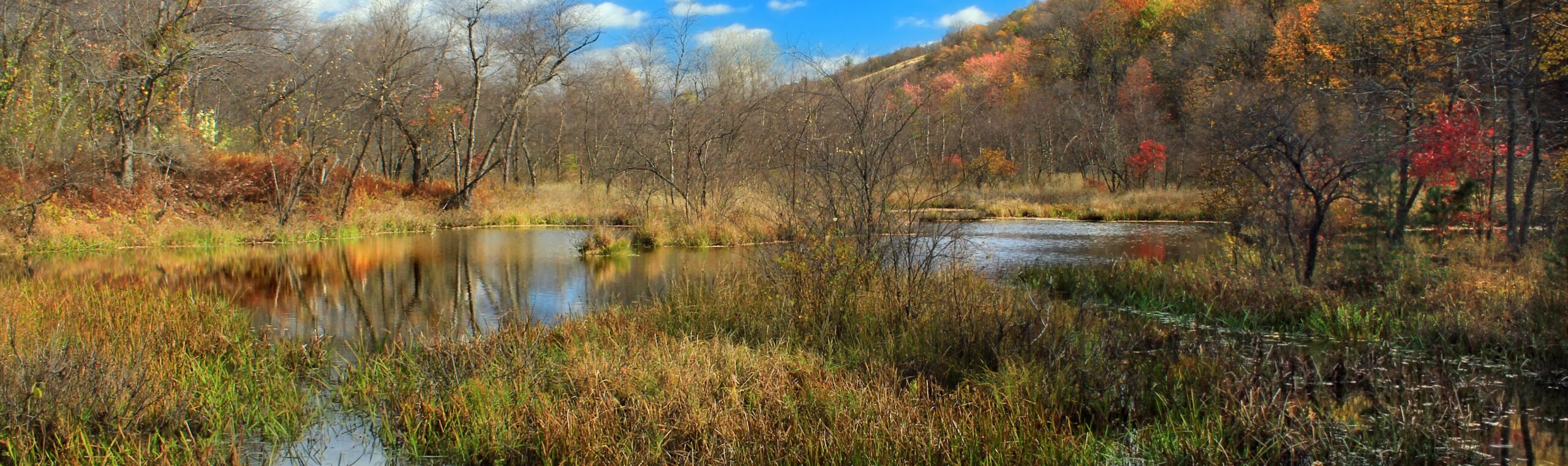
The Lehigh Gap Nature Center (LGNC) (Learn more about the Lehigh Gap Nature Center) is on the ground where there used to be the New Jersey Zinc Company, established in Palmerton in 1898, and this company led to an overpopulation of toxic metals in the environment.
The effects of these toxic metals and minerals still show to this day, and up until 2002, the land around where the factory originally resided (roughly 2,000 acres) was so corroded and barren that no life, not even bacteria, could survive. In 1983, however, the area was deemed an EPA Superfund Site (Palmerton Zinc Pile Superfund Site), (Learn more about the Palmerton Superfund Site) and the Lehigh Gap Nature Center has been at the forefront of rehabilitating the land.
Due to the restorative efforts, hundreds of species of animals, plants, and bacteria have been documented, and now thrive on the land.
The LGNC uses native plants to help heal the land that won’t uptake certain minerals and metals, such as zinc, so it can’t be further polluted into the environment. They use an ingenious method of “sandwiching” the toxic metals in the ground, low enough so plants and animals can’t get to them, and so they aren’t harmfully affecting the environment.
Muhlenberg Chemistry Partnership
In recent years, our lab at Muhlenberg College has been collaborating with the LGNC by using chemical analysis to monitor analytes such as zinc, calcium, magnesium, phosphate, and other anions, in the water bodies throughout the site, to assess water quality and to better understand further actions and restorative techniques that could be implemented to better restore the land.
Project Lab and Summer Research
In the spring semesters of 2022 and 2023, Muhlenberg College Project Lab, a special section of General Chemistry II where students engage in semester-long research projects (Learn more about Project Lab), partnered with LGNC to investigate water quality through chemical analysis. During the summer of 2023, we continued this work, focusing on specific analytes. This summer session of sampling and research allotted us plenty of time to take precautions to maximize the prevention of interferents when sampling our water and analyzing the different analytes.
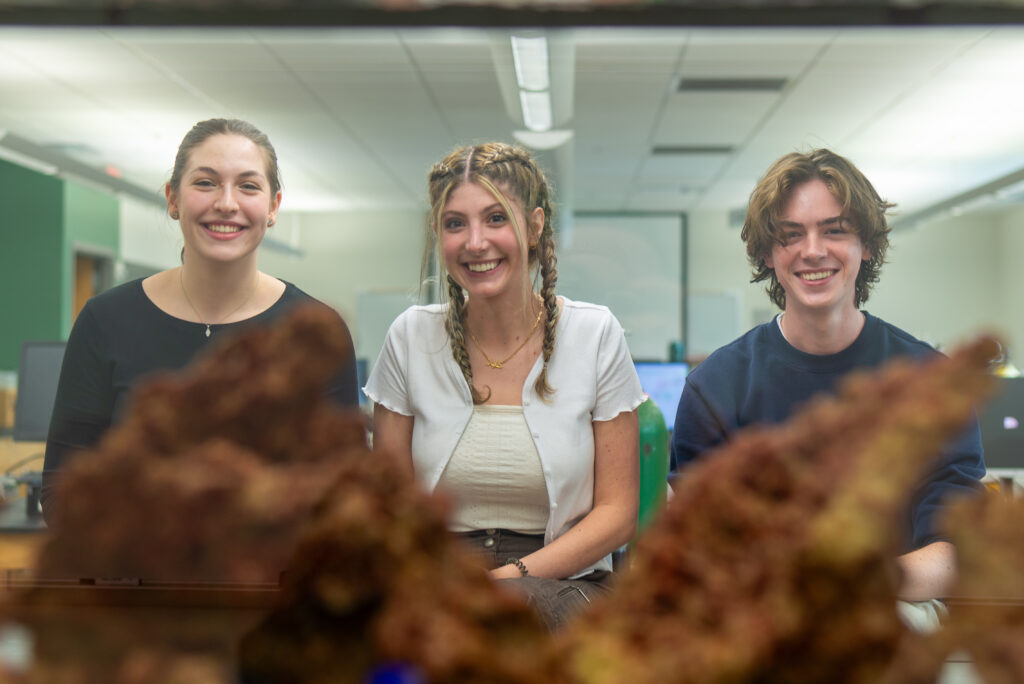
Figure 1: Elizabeth, Cayla, and Nolan, Summer 2023 Researchers.
Summer 2023 Sampling
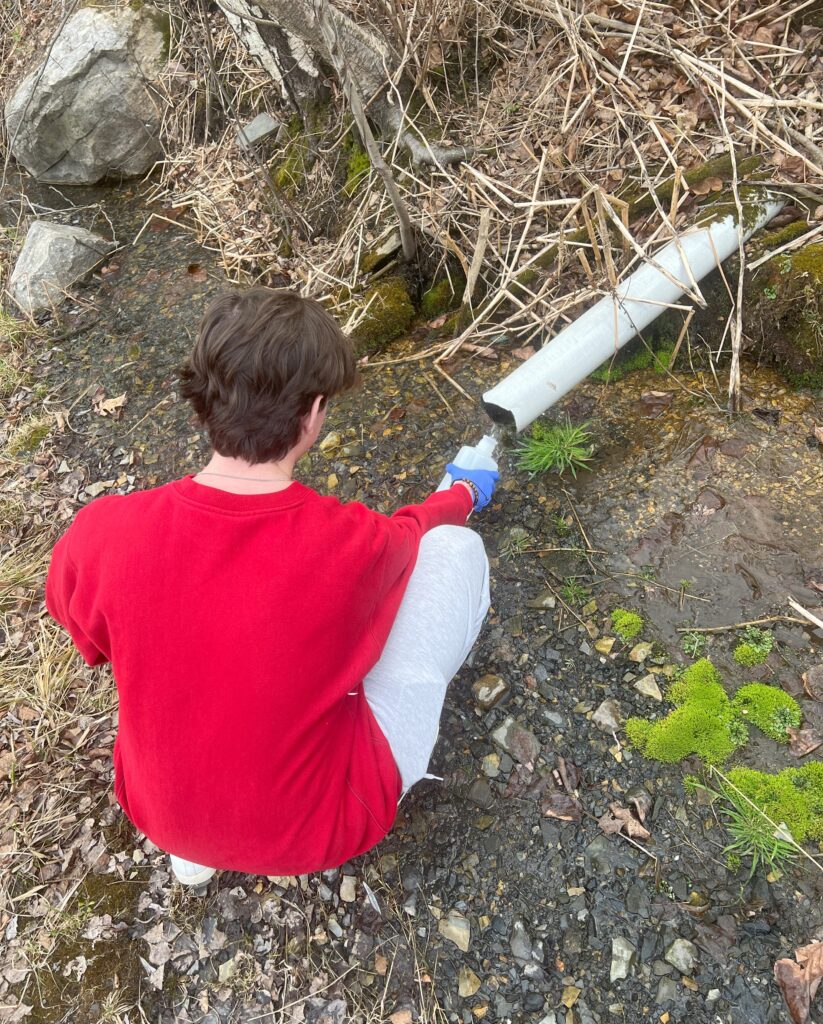
Sampling for this project has occurred at eight different sites. This summer, all the sites were able to be sampled, with one exception, S5, Schwab Falls, as it was dry. For the sampling itself, we acid-washed sixteen 1-Liter plastic bottles by rinsing with 1M hydrochloric acid, followed by a deionized water rinse, then a 1M nitric acid wash, followed by a deionized water rinse, then, lastly, a thorough rinse with Millipore purified water. When collecting the water samples, we wore nitrile gloves, recorded GPS coordinates, and collected two 1-liter plastic bottles per sampling site. One bottle from each site was treated with nitric acid (1.5 mL per liter of water) for metal analysis. All samples were stored in a refrigerator (4 oC) until they were analyzed.
Figure 2: Nolan sampling from S1 (Osprey House Spring Pipe) in Project Lab 2023 at the Lehigh Gap Nature Center

In continuing research this summer, some analytes were examined more deeply, allowing for careful sample preparation and instrumental analysis methods as well as thorough data collection and analysis.
Phosphate
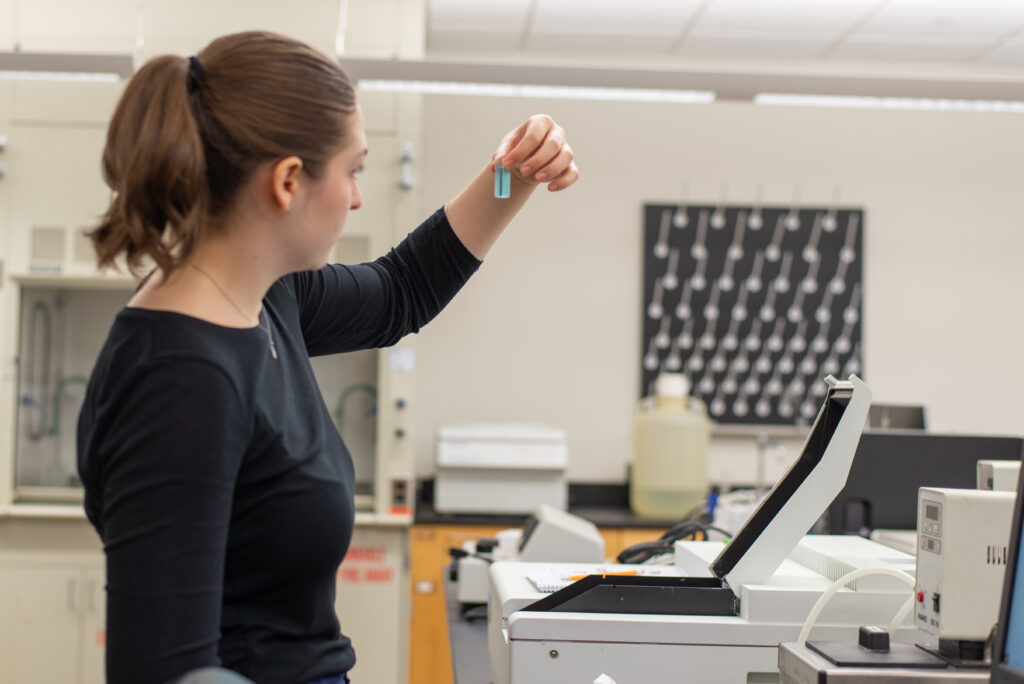
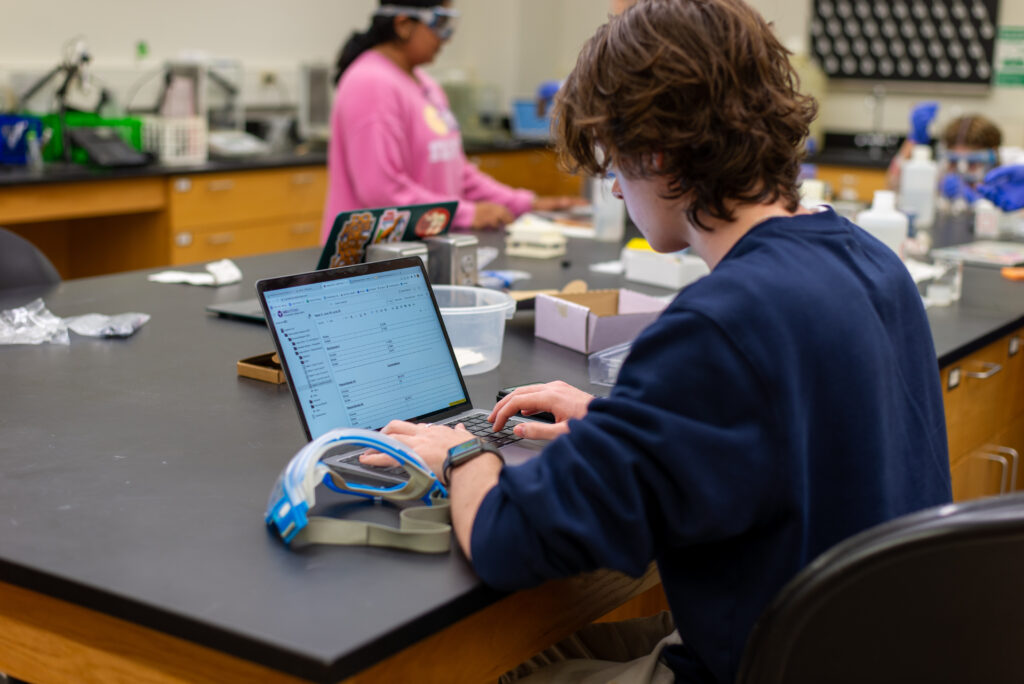
Phosphate, specifically orthophosphate, was analyzed using a UV Visible Absorption Spectroscopy.
Anions
Anions, specifically chloride, nitrate, and sulfate, were analyzed using Ion Chromatography. Secret
Metals
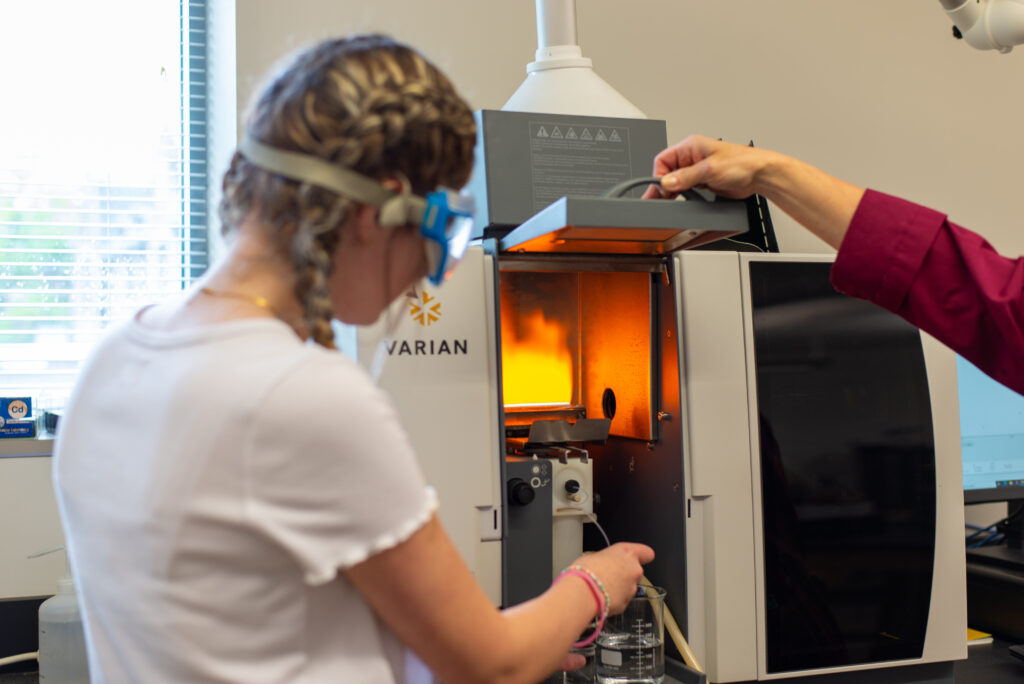
Metals, specifically calcium, magnesium, and zinc, were analyzed using Atomic Absorption Spectroscopy.
